
Financial freedom no longer requires a large inheritance or a six-figure loan. Today, the right small business ideas can turn a laptop, a phone, or a single skill into a steady income stream. Thanks to the internet, anyone with determination can launch a business from their living room and scale it into something far bigger.
Technology has lowered the barriers that once kept ordinary people out of entrepreneurship. Cloud tools, social media, and global marketplaces mean you no longer need a storefront, a large team, or a hefty bank balance to get started. Whether you’re a student looking for extra income, a stay-at-home parent wanting flexibility, or a side hustler ready to go full-time, there’s an opportunity that fits your skills and budget.
In this guide, you’ll find 25 practical, low-cost business ideas, what they typically cost to start, how much they can earn, common mistakes to avoid, and proven tips for long-term growth.
Why Start a Small Business in 2026?
Starting a business today is more accessible than at any point in history. Here’s why so many people are taking the leap:
- Low startup barriers – Many businesses can be launched with under $500, using tools you already own.
- Flexibility and independence – You set your own hours, choose your clients, and design a lifestyle around your priorities.
- Multiple income streams – Small businesses can be run alongside a job, creating extra income without quitting your day job immediately.
- Online business opportunities – E-commerce, freelancing, and content creation let you reach customers worldwide, not just locally.
- Potential for long-term growth – What starts as a side hustle can evolve into a full-scale company with employees, products, and recurring revenue.
How to Choose the Right Small Business Idea
Not every business idea suits every person. Before committing, weigh these factors:
- Skills and interests – Choose something you’re good at or genuinely enjoy; this keeps you motivated during slow periods.
- Startup budget – Be honest about how much capital you can risk without affecting your essential expenses.
- Market demand – Validate that real people are searching for or paying for the product or service.
- Competition – Some competition is healthy, but oversaturated markets require a clear differentiator.
- Scalability – Consider whether the business can grow beyond your personal time and effort.
- Profit potential – Compare startup and running costs against realistic revenue expectations before diving in.
25 Profitable Small Business Ideas
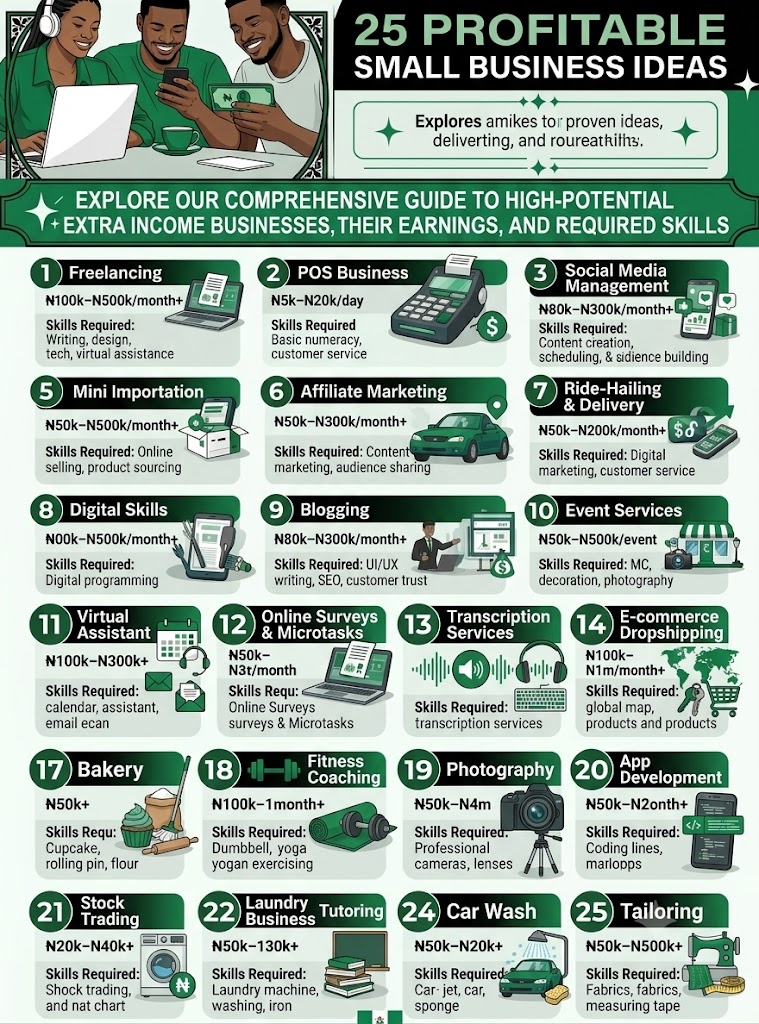
Below are 25 of the best small business ideas for beginners and experienced entrepreneurs alike, with estimated costs and earning potential.
- Freelance Writing – Write articles, blogs, or copy for businesses. Startup cost: under $100 (laptop and internet). Income potential: $500–$5,000+/month. Beginner-friendly.
- Virtual Assistant Services – Handle admin tasks, scheduling, or email management for busy professionals. Startup cost: under $100. Income potential: $400–$3,000/month. Beginner-friendly.
- Social Media Management – Manage content calendars and engagement for small businesses. Startup cost: $50–$300. Income potential: $500–$4,000/month. Beginner-friendly.
- Blogging – Build a niche website and monetize through ads, affiliates, or products. Startup cost: $50–$200 (hosting and domain). Income potential: varies widely, $0–$10,000+/month long-term. Beginner-friendly, but requires patience.
- Affiliate Marketing – Promote other companies’ products and earn commissions. Startup cost: under $100. Income potential: $100–$5,000+/month. Best for those with an existing audience.
- YouTube Channel – Create video content around a niche and monetize through ads and sponsorships. Startup cost: under $300 (basic camera or smartphone). Income potential: $0–$10,000+/month once established. Beginner-friendly, slower growth curve.
- Graphic Design – Design logos, social posts, or branding materials for clients. Startup cost: $200–$500 (software subscription). Income potential: $500–$5,000/month. Suitable for those with design skills.
- Web Design – Build websites for small businesses and entrepreneurs. Startup cost: $100–$500. Income potential: $1,000–$8,000/month. Better suited for those with some technical background.
- Online Tutoring – Teach academic subjects, languages, or test prep virtually. Startup cost: under $100. Income potential: $300–$3,000/month. Beginner-friendly.
- E-commerce Store – Sell physical or digital products through your own online shop. Startup cost: $200–$1,000. Income potential: $500–$10,000+/month. Suitable for both beginners and experienced sellers.
- Print-on-Demand Business – Sell custom-designed apparel and merchandise without holding inventory. Startup cost: under $100. Income potential: $200–$4,000/month. Beginner-friendly.
- Digital Marketing Agency – Offer SEO, ads, or content strategy services to clients. Startup cost: $300–$1,000. Income potential: $1,000–$10,000+/month. Best for experienced marketers.
- Dropshipping – Sell products online while a supplier handles inventory and shipping. Startup cost: $200–$500. Income potential: $300–$6,000/month. Beginner-friendly, but competitive.
- Cleaning Services – Offer residential or commercial cleaning. Startup cost: $100–$400 (supplies). Income potential: $1,000–$5,000/month. Beginner-friendly.
- Event Planning – Organize weddings, parties, or corporate events. Startup cost: $200–$500. Income potential: $1,000–$8,000/month. Better for organized, detail-oriented individuals.
- Photography Business – Offer portrait, event, or product photography services. Startup cost: $500–$1,500 (if buying equipment) or less if using existing gear. Income potential: $500–$5,000/month. Suitable for hobbyists turning professional.
- Catering Services – Prepare and deliver food for events and gatherings. Startup cost: $300–$1,000. Income potential: $1,000–$6,000/month. Best for those with cooking experience.
- Laundry Services – Provide pickup, wash, and delivery laundry services locally. Startup cost: $200–$800. Income potential: $500–$3,000/month. Beginner-friendly.
- Mobile Phone Repairs – Repair screens, batteries, and hardware issues for smartphones. Startup cost: $300–$1,000 (tools and parts). Income potential: $500–$4,000/month. Requires basic technical training.
- Food Delivery Service – Deliver meals from local restaurants or home kitchens. Startup cost: under $200 (if using your own vehicle). Income potential: $400–$3,000/month. Beginner-friendly.
- Fitness Coaching – Offer personal training or online fitness programs. Startup cost: under $300. Income potential: $500–$5,000/month. Best for certified or experienced trainers.
- Pet Care Services – Provide pet sitting, walking, or grooming. Startup cost: under $200. Income potential: $300–$3,000/month. Beginner-friendly.
- Real Estate Agency – Help clients buy, sell, or rent properties. Startup cost: $500–$2,000 (licensing and marketing). Income potential: $2,000–$15,000+/month. Best for those willing to get licensed and build networks.
- Handmade Crafts Business – Sell jewelry, candles, or other handcrafted goods online or locally. Startup cost: $100–$500. Income potential: $200–$3,000/month. Beginner-friendly.
- Consulting Services – Offer expert advice in your field, such as business, finance, or marketing. Startup cost: under $200. Income potential: $1,000–$10,000+/month. Best suited for experienced professionals.
Best Online Small Business Ideas
Among these 25 options, a few stand out as the best small business ideas for anyone wanting to work entirely online:
- Blogging – Builds long-term, passive traffic and multiple monetization options.
- Affiliate Marketing – Requires no inventory and can be layered onto any existing content platform.
- Freelancing – Offers immediate income potential with minimal setup.
- Online Courses – Turns your expertise into a scalable digital product sold repeatedly.
- YouTube Content Creation – Builds an audience and brand that can be monetized in multiple ways.
- E-commerce – Allows you to sell physical or digital products to a global customer base.
These online business ideas are attractive because they have low overhead, can be run from anywhere, and scale without requiring proportional increases in your time or staff.
Small Business Ideas With Low Startup Costs
If your budget is under $500, focus on service-based businesses that rely on skills rather than equipment or inventory:
- Freelance services (writing, editing, design) – minimal tools required beyond a computer.
- Virtual assistance – no specialized software or certification needed to start.
- Content writing – can begin with just a laptop and internet connection.
- Social media management – learn through free resources and start with one or two clients.
- Tutoring – leverage knowledge you already have in school subjects or languages.
These low-cost business ideas are ideal stepping stones for first-time business owners who want to test entrepreneurship without major financial risk.
Common Mistakes New Entrepreneurs Make
Avoid these pitfalls that derail many promising small businesses:
- Lack of planning – Jumping in without a basic business plan leads to wasted time and money. Solution: outline your goals, target customers, and budget before launching.
- Choosing a business without market research – Passion alone doesn’t guarantee demand. Solution: validate your idea with surveys, competitor analysis, or a small test run.
- Poor financial management – Mixing personal and business finances causes confusion and losses. Solution: open a separate account and track every expense.
- Inconsistent marketing – Sporadic promotion leads to inconsistent sales. Solution: create a simple, repeatable marketing schedule.
- Unrealistic expectations – Expecting overnight success leads to early burnout. Solution: set realistic milestones and celebrate small wins along the way.
Tips for Growing a Small Business Successfully
Once your business is up and running, focus on these growth strategies:
- Building an online presence – A website and active social profiles make you discoverable and credible.
- Customer service excellence – Happy customers become repeat buyers and referral sources.
- Leveraging social media – Use platforms where your target audience already spends time.
- Networking – Connect with other entrepreneurs, mentors, and potential clients regularly.
- Continuous learning – Stay updated on industry trends, tools, and customer preferences.
- Reinvesting profits – Put early earnings back into marketing, tools, or inventory to fuel growth.
Frequently Asked Questions
What is the best small business to start in 2026? The best small business depends on your skills and budget, but freelance services, e-commerce, and content creation remain consistently strong choices due to low startup costs and high demand.
Which small business is most profitable? Consulting, digital marketing agencies, and real estate tend to offer the highest profit margins, though they often require more experience or licensing than entry-level options.
Can I start a business with little money? Yes. Many service-based businesses, such as freelance writing, virtual assistance, and social media management, can be started for under $500 using skills and tools you likely already have.
What online businesses make the most money? E-commerce, digital marketing agencies, and online courses generally have the highest income ceilings because they can scale without a proportional increase in time spent.
How long does it take for a small business to become profitable? Most small businesses take six months to two years to become consistently profitable, depending on the industry, marketing effort, and startup costs involved.
Conclusion
Building financial independence starts with choosing from the many small business ideas available today and taking the first step. Whether you’re drawn to freelance writing, e-commerce, consulting, or a local service business, success comes from matching your skills and budget to genuine market demand, then staying consistent through the early challenges.
Avoid the common mistakes of poor planning and inconsistent marketing, and instead focus on building an online presence, serving your customers well, and reinvesting profits as you grow. The opportunities available in 2026 are more accessible than ever, so pick one idea from this list, start small, and commit to learning as you go. Your path to financial freedom begins with a single decision to start.