
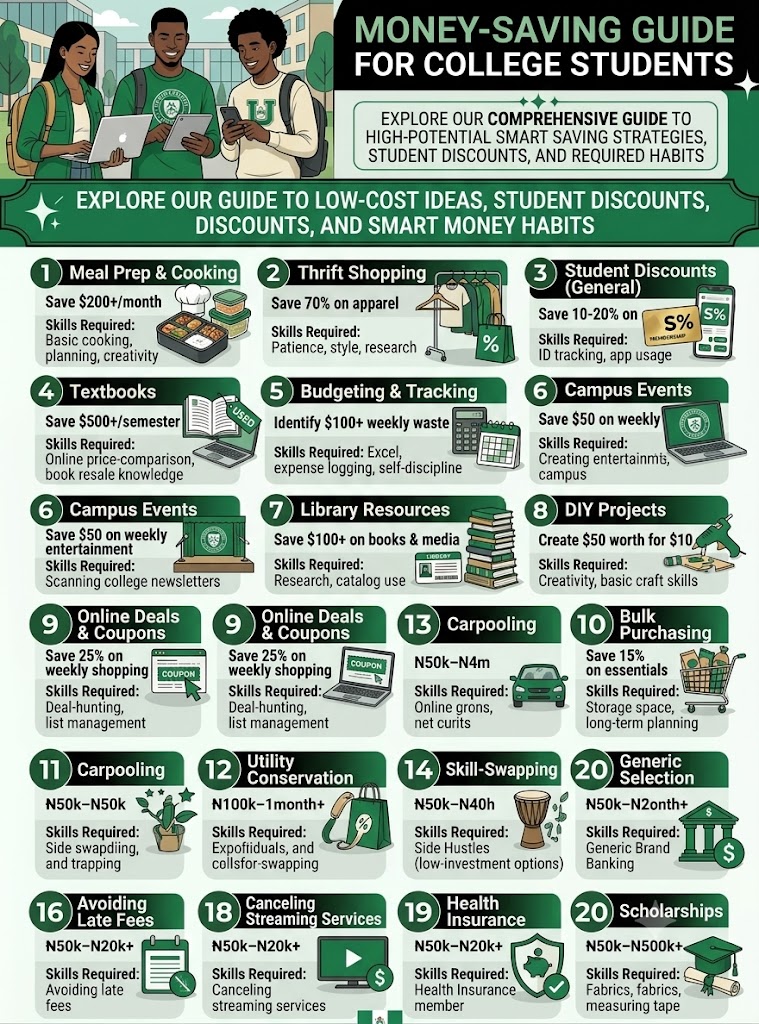
College life is an exciting chapter filled with new experiences, academic opportunities, and personal growth. However, it also comes with financial challenges. Rising tuition fees, accommodation costs, transportation expenses, and daily living needs can quickly put pressure on a student’s budget. Many students find themselves struggling to balance their educational goals with their financial responsibilities.
This A Money-Saving Guide for College Students is designed to help students make smarter financial decisions while enjoying their college experience. Whether you’re a freshman learning to manage your finances for the first time or an international student adjusting to a new environment, developing strong money-management skills can make a significant difference.
In this guide, you’ll discover practical budgeting strategies, money-saving tips, common financial mistakes to avoid, useful budgeting apps, and side hustles that can help you earn extra income while studying.
Why Money Management Matters for College Students
Learning how to manage money during college can benefit students for years to come.
Financial Independence
Managing your own finances teaches responsibility and reduces dependence on parents or loans.
Reducing Stress
Financial worries can negatively impact academic performance. Having a plan for your money reduces anxiety and provides peace of mind.
Avoiding Unnecessary Debt
Good money management helps students avoid excessive borrowing and credit card debt.
Building Lifelong Financial Habits
The habits you develop in college often continue into adulthood, influencing your future financial success.
Preparing for Life After Graduation
Budgeting and saving skills prepare students for major financial responsibilities such as rent, car payments, and investments.
Create a Realistic Student Budget
A budget is the foundation of effective student money management.
Track Your Income and Expenses
List all income sources, including:
- Part-time jobs
- Scholarships
- Allowances
- Side hustles
Track expenses such as:
- Tuition
- Rent
- Food
- Transportation
- Entertainment
Use Budgeting Apps
Budgeting apps make it easier to monitor spending and stay on track.
Set Spending Limits
Determine how much you can safely spend in each category every month.
Create Monthly Savings Goals
Even saving a small amount consistently can add up over time.
Example Student Budget
| Category | Monthly Amount |
|---|---|
| Income | $800 |
| Rent | $300 |
| Food | $150 |
| Transportation | $50 |
| Utilities | $50 |
| Entertainment | $50 |
| Savings | $100 |
| Miscellaneous | $100 |
15 Smart Money-Saving Tips for College Students
1. Create a Monthly Budget
A budget helps you understand where your money goes and prevents overspending.
2. Cook Meals Instead of Eating Out
Preparing meals at home is often significantly cheaper than eating at restaurants or ordering takeout regularly.
3. Buy Used or Digital Textbooks
Used textbooks and digital versions can save hundreds of dollars each semester.
4. Take Advantage of Student Discounts
Many businesses offer discounts on:
- Software
- Transportation
- Entertainment
- Restaurants
- Online subscriptions
Always carry your student ID.
5. Use Public Transportation
Public transportation is generally more affordable than owning and maintaining a car.
6. Avoid Impulse Purchases
Wait 24 hours before making non-essential purchases. This simple habit can reduce unnecessary spending.
7. Share Housing Costs With Roommates
Living with roommates helps split rent, utilities, and internet bills.
8. Find Free Campus Activities
Most colleges organize free events, workshops, sports activities, and entertainment programs.
9. Limit Credit Card Usage
Only use credit cards when necessary and pay balances on time to avoid interest charges.
10. Buy Generic Brands
Store-brand products often provide similar quality at lower prices.
11. Use Cashback and Reward Apps
Cashback apps can help you earn money back on everyday purchases.
12. Reduce Subscription Expenses
Review your subscriptions regularly and cancel services you rarely use.
13. Earn Extra Income Through Side Hustles
A flexible side hustle can provide additional funds without interfering with your studies.
14. Save on Utility Bills
Simple habits like turning off lights and unplugging devices can lower monthly expenses.
15. Start an Emergency Fund
Unexpected expenses happen. Building an emergency fund protects you from financial setbacks.
Common Financial Mistakes College Students Make
Overspending on Entertainment
Frequent dining out, shopping, and social activities can quickly drain a budget.
Solution: Set a monthly entertainment budget and stick to it.
Misusing Credit Cards
Many students accumulate debt by relying heavily on credit cards.
Solution: Use credit responsibly and pay balances in full whenever possible.
Ignoring Budgeting
Without a budget, it’s easy to lose track of spending.
Solution: Review your finances weekly.
Taking Unnecessary Loans
Borrowing more than necessary can increase future financial burdens.
Solution: Only borrow what you genuinely need.
Not Tracking Expenses
Small purchases add up over time.
Solution: Record every expense, no matter how small.
Best Budgeting Apps for Students
Mint
Mint automatically tracks spending, categorizes expenses, and provides budgeting insights.
YNAB (You Need a Budget)
YNAB encourages proactive budgeting and goal setting.
PocketGuard
PocketGuard shows how much disposable income remains after bills and savings.
Goodbudget
This app uses a digital envelope system to control spending.
EveryDollar
EveryDollar helps users create simple monthly budgets and monitor expenses easily.
Easy Side Hustles for College Students
Freelance Writing
Students with strong writing skills can create articles, blog posts, and website content.
Tutoring
Tutoring fellow students or younger learners can provide consistent income.
Graphic Design
Creative students can offer logo design, social media graphics, and marketing materials.
Virtual Assistance
Businesses often hire virtual assistants for administrative support tasks.
Social Media Management
Many small businesses need help managing their social media accounts.
Selling Digital Products
Students can create and sell eBooks, templates, printables, or online courses.
These side hustles can help students achieve savings goals while gaining valuable work experience.
How to Build Healthy Financial Habits in College
Save Regularly
Treat savings like a monthly bill and contribute consistently.
Set Financial Goals
Having clear goals increases motivation and accountability.
Track Spending
Regular expense tracking helps identify areas where money can be saved.
Avoid Lifestyle Inflation
As income increases, avoid increasing spending unnecessarily.
Learn Personal Finance Basics
Read books, listen to podcasts, and follow reputable financial education resources.
Frequently Asked Questions
How Much Money Should a College Student Save Each Month?
A good starting point is saving at least 10% to 20% of monthly income whenever possible.
What Is the Best Budgeting Method for Students?
The 50/30/20 rule is popular, but students can adjust percentages based on their financial situation.
How Can Students Save Money on Textbooks?
Consider buying used textbooks, renting books, sharing with classmates, or using digital versions.
Should Students Use Credit Cards?
Credit cards can help build credit when used responsibly, but students should avoid carrying balances.
What Are the Best Side Hustles for College Students?
Freelance writing, tutoring, graphic design, virtual assistance, and social media management are among the most flexible and profitable options.
Conclusion
Managing money effectively during college is one of the most valuable skills a student can develop. By creating a realistic budget, tracking expenses, avoiding common financial mistakes, and taking advantage of money-saving opportunities, students can significantly improve their financial well-being.
This A Money-Saving Guide for College Students demonstrates that saving money does not require drastic sacrifices. Small actions such as cooking meals at home, using student discounts, limiting subscriptions, and building an emergency fund can lead to substantial savings over time.
Financial success is built through consistency rather than perfection. Start with one or two strategies today, gradually develop better money habits, and stay committed to your financial goals. The lessons you learn now will continue benefiting you long after graduation, helping you build a secure and financially healthy future.