
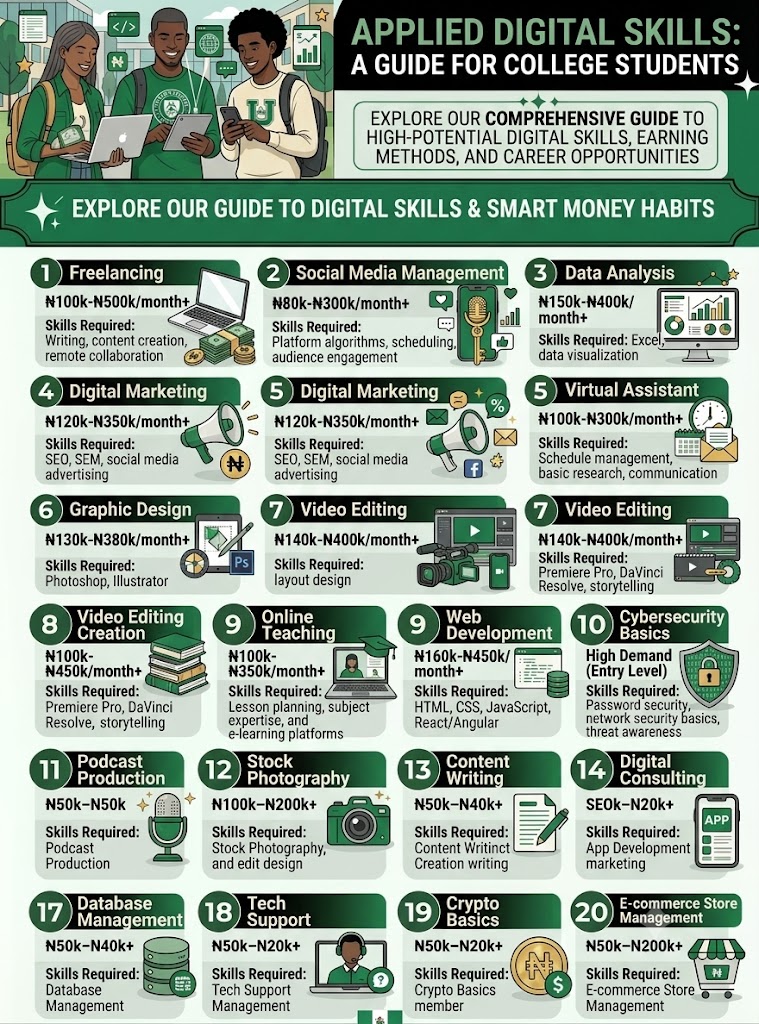
Why Digital Skills Are No Longer Optional
Think about the last time you sent an email, searched for something online, or joined a video call. Chances are, you did at least one of these things today. Digital tools have quietly become part of everything we do — from how we work and study to how we shop, communicate, and grow a business.
But knowing how to use these tools is only part of the picture. What really makes a difference is being able to use them effectively to get real results. That’s where applied digital skills come in.
Applied digital skills are the practical, hands-on abilities that allow you to use technology to solve everyday problems, complete tasks, and achieve goals — in school, at work, or in running a business.
In today’s digital economy, these skills are no longer a bonus. They’re a baseline. Whether you’re a student trying to improve your grades, a professional looking for better job opportunities, or an entrepreneur building a brand, mastering applied digital skills is one of the smartest investments you can make in yourself.
What Are Applied Digital Skills?
Applied digital skills are exactly what they sound like: digital skills put into real-world action. They go beyond just knowing what a computer is or how to turn on a smartphone. They’re about using technology to accomplish something meaningful.
In simple terms, these are the computer and internet skills that help you:
- Write and format documents professionally
- Organize and analyze information using spreadsheets
- Communicate clearly through email and video calls
- Research topics accurately and responsibly online
- Create presentations, graphics, and digital content
For example, knowing how to use Google Docs or Microsoft Word to write a report is an applied digital skill. Building a budget tracker in Excel is an applied digital skill. Setting up a Zoom meeting or sending a professional email — those count too.
What separates applied digital skills from general digital literacy is the emphasis on doing. It’s not just about understanding technology; it’s about using it confidently to solve real problems and deliver real results.
Why Applied Digital Skills Matter in Today’s World
We live in a world that runs on technology. Almost every industry — from healthcare and education to finance, agriculture, and entertainment — now depends on some form of digital tool or platform. This shift has made applied digital skills one of the most in-demand abilities in the job market today.
Here’s why they matter:
1. They Improve Your Employability
Employers across every sector are looking for people who can hit the ground running with digital tools. Strong computer skills and online skills make you a more competitive candidate — even for roles that aren’t traditionally “tech” jobs.
2. They Boost Your Productivity
Whether you’re a student submitting assignments or a professional managing projects, applied digital skills help you work smarter and faster. Tasks that used to take hours can be done in minutes with the right tools and know-how.
3. They Open Doors to Remote Work and Freelancing
The rise of remote work has made technology skills essential for anyone who wants flexibility in their career. Freelancers, consultants, and remote workers all rely on digital tools to communicate, collaborate, and deliver their work.
4. They Support Business Growth
For entrepreneurs, applied digital skills are game-changers. From digital marketing and social media management to online invoicing and customer communication, these skills help small businesses compete and grow in a crowded marketplace.
5. They Build Confidence and Digital Literacy
When you know how to use technology effectively, you feel less overwhelmed and more in control. Digital learning builds confidence — and confident people take more initiative, make fewer mistakes, and adapt faster to change.
Examples of Applied Digital Skills in Action
Let’s look at some of the most common and valuable applied digital skills you can develop:
Word Processing and Document Creation
Creating and formatting professional documents using tools like Microsoft Word or Google Docs — including writing reports, CVs, cover letters, and proposals.
Spreadsheet Management and Data Analysis
Using Microsoft Excel or Google Sheets to organize data, build budgets, track expenses, and perform basic calculations. These skills are in demand across business, finance, education, and research.
Presentation Design
Building clear and visually engaging presentations using tools like PowerPoint or Canva. This is essential for students, teachers, job seekers, and business professionals alike.
Online Collaboration Tools
Working with platforms like Google Workspace (Docs, Drive, Meet, Gmail) or Microsoft Teams to collaborate with colleagues, classmates, or clients — regardless of where everyone is located.
Internet Research and Information Verification
Knowing how to search effectively, identify credible sources, and fact-check information online is one of the most underrated applied digital skills. It’s essential for students, journalists, researchers, and anyone who makes decisions based on online information.
Digital Communication
Writing professional emails, using messaging apps like Slack or WhatsApp for work, and participating in video calls via Zoom or Google Meet — these are everyday skills that professionalism demands.
Each of these examples represents a real-world application of digital literacy — and each one adds measurable value to your personal and professional life.
How to Learn Applied Digital Skills
The good news? You don’t need to go back to school or spend a fortune to build these skills. There are more resources available today than ever before.
Free Online Courses
Platforms like Google Digital Garage, Coursera, Khan Academy, and Alison offer free courses on everything from spreadsheets to digital marketing. Many come with certificates you can add to your CV.
YouTube Tutorials
YouTube is one of the best free resources for digital learning. Search for any tool — Excel, Canva, Google Docs — and you’ll find step-by-step video guides from beginners to advanced.
School and Training Programs
Many schools, colleges, and community centres now offer digital skills training programmes. Look for workshops, bootcamps, or short courses in your area.
Practice Through Real Projects
The fastest way to learn is to do. Set yourself small challenges — create a budget spreadsheet, design a one-page CV in Canva, or send a professionally formatted email. Real practice beats reading about it every time.
Use Your Smartphone
Your phone is already a digital learning tool. Apps like Google Drive, Microsoft Office Mobile, and Canva are free and fully functional — start there and work your way up.
Benefits of Mastering Applied Digital Skills
When you invest time in developing applied digital skills, the returns are significant:
- Better job opportunities — more roles become accessible to you
- Increased income potential — digital skills are often tied to higher-paying jobs and freelance gigs
- Ability to work remotely — giving you more flexibility and freedom
- Improved academic performance — from research to presentation, digital tools sharpen your output
- Stronger problem-solving abilities — technology skills train you to think logically and find solutions efficiently
These aren’t abstract benefits. They’re practical, life-changing outcomes that come from consistent digital learning and practice.
Conclusion: Start Learning Today
We are living in the most connected era in human history — and the pace of change is only accelerating. Applied digital skills are not just helpful; they are essential tools for thriving in the modern world.
Whether you’re a student preparing for the job market, a professional looking to advance, or an entrepreneur building something new, investing in your technology skills pays off in real, measurable ways.
The best time to start was yesterday. The second-best time is today.
Pick one skill from this article — maybe it’s mastering Excel, or getting comfortable with Google Workspace — and take that first step. Every expert was once a beginner who simply decided to start.
Stay curious. Stay learning. Stay relevant.
Want to learn more about digital skills and career development? Explore our other guides on digital literacy, online learning, and technology for beginners.