
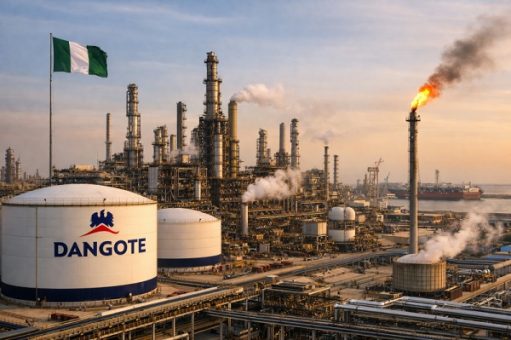
The Dangote Refinery is one of the most ambitious industrial projects in Africa and a landmark development in Nigeria’s oil and gas sector. Designed to reduce the country’s dependence on imported petroleum products, the refinery is expected to strengthen energy security, create jobs, and support economic growth.
As Africa’s largest refinery, the Dangote Refinery has attracted global attention from investors, policymakers, and energy experts. Its massive refining capacity and strategic importance make it a key player in the future of Nigeria’s economy and the broader African energy market.
Key Takeaways
- Dangote Refinery is the largest single-train refinery in Africa.
- It is located in the Lekki Free Zone, Lagos State, Nigeria.
- The refinery has a processing capacity of approximately 650,000 barrels of crude oil per day.
- It produces petrol, diesel, aviation fuel, LPG, and other petroleum products.
- The project is expected to reduce Nigeria’s dependence on imported fuel.
- It supports job creation, industrialization, and economic diversification.
- The refinery has the potential to become a major exporter of refined petroleum products across Africa.
Dangote Refinery
Dangote Refinery is a large-scale petroleum refining facility owned by Aliko Dangote through the Dangote Group. Located in Lagos, Nigeria, the refinery was built to process crude oil into refined petroleum products for domestic consumption and export. It is strategically important because it helps reduce fuel imports, improve energy security, and strengthen Nigeria’s economy.
History and Development of Dangote Refinery
The idea for the refinery emerged from the need to address Nigeria’s long-standing dependence on imported fuel despite being one of Africa’s largest crude oil producers.
The project was announced by the Dangote Group as part of a broader strategy to transform Nigeria’s industrial landscape. Construction officially commenced after years of planning, feasibility studies, and infrastructure development.
The refinery required billions of dollars in investment, making it one of the largest private-sector investments in Africa. Over several years, thousands of engineers, technicians, and construction workers contributed to the project’s development.
Major milestones included:
- Site preparation and land reclamation.
- Construction of refinery units.
- Installation of storage facilities.
- Development of marine infrastructure.
- Commissioning and testing phases.
- Commencement of fuel production.
The refinery gradually transitioned from construction to commercial operations, marking a significant achievement for Nigeria’s downstream petroleum sector.
Dangote Refinery Location and Capacity
Where Is Dangote Refinery Located?
The Dangote Refinery is situated within the Lekki Free Zone in Lagos State, Nigeria.
This location offers several strategic advantages:
- Proximity to international shipping routes.
- Access to deep-sea port facilities.
- Efficient logistics infrastructure.
- Availability of industrial support services.
Its coastal location enables the efficient import of crude oil and export of refined petroleum products to international markets.
Refining Capacity
One of the most remarkable aspects of the refinery is its scale.
The Dangote Refinery capacity is approximately 650,000 barrels per day (bpd), making it the largest single-train refinery in Africa and one of the largest in the world.
Its production capabilities include:
- Premium Motor Spirit (PMS)
- Automotive Gas Oil (Diesel)
- Aviation fuel
- Liquefied Petroleum Gas (LPG)
- Naphtha
- Fuel oil
This refining capacity is sufficient to meet a significant portion of Nigeria’s domestic fuel demand while also creating export opportunities.
Products Produced by Dangote Refinery
The refinery produces a wide range of petroleum products essential to economic activity.
Petrol (PMS)
Petrol remains one of the most demanded petroleum products in Nigeria. Local production helps reduce import dependence and improve supply stability.
Diesel
Dangote Refinery diesel production supports transportation, manufacturing, construction, and power generation sectors.
Aviation Fuel
The refinery produces aviation turbine fuel used by domestic and international airlines operating within Nigeria and across Africa.
Liquefied Petroleum Gas (LPG)
LPG supports household cooking, commercial applications, and cleaner energy adoption.
Other Petroleum Products
Additional products include:
- Naphtha
- Fuel oil
- Petrochemical feedstocks
These products support various industrial activities and contribute to economic development.
Economic Impact of Dangote Refinery on Nigeria
The Dangote Refinery economic impact extends beyond fuel production.
Job Creation
The project has generated thousands of direct and indirect jobs across construction, logistics, engineering, maintenance, and operations.
Employment opportunities continue to expand through supporting industries and service providers.
Foreign Exchange Savings
Nigeria has historically spent substantial amounts on fuel imports.
By refining petroleum products locally, the country can reduce foreign exchange outflows and strengthen its currency reserves.
Reduced Fuel Imports
Local refining reduces reliance on imported petroleum products, improving national energy security and reducing supply disruptions.
Increased Government Revenue
The refinery contributes to government revenue through taxes, duties, and economic activities generated throughout the value chain.
Economic Diversification
The project supports Nigeria’s efforts to diversify its economy beyond crude oil exports by adding value through local processing.
Industrial Development
The refinery has stimulated infrastructure development, logistics investments, and industrial growth within the Lekki corridor and beyond.
Benefits of Dangote Refinery
The refinery offers several strategic advantages for Nigeria and Africa.
Improved Energy Security
- Reduced dependence on imported fuel.
- More reliable domestic fuel supply.
- Better resilience against international market disruptions.
Stable Fuel Supply
- Increased local production capacity.
- Improved product availability.
- Enhanced supply chain efficiency.
Support for Local Industries
- Reliable fuel access for manufacturers.
- Lower logistics costs.
- Increased industrial productivity.
Export Opportunities
- Supply of refined products to African markets.
- Increased export earnings.
- Enhanced regional trade.
Strengthening the Downstream Sector
- Increased competition.
- Improved efficiency.
- Greater private-sector participation.
Challenges Facing Dangote Refinery
Despite its achievements, the refinery faces several challenges.
Crude Oil Supply Issues
Securing sufficient crude oil feedstock remains essential for maximizing production capacity.
Supply disruptions can affect operational efficiency and output levels.
Regulatory Concerns
Changes in government policies, taxes, and regulatory frameworks may influence refinery operations.
Distribution Challenges
Efficient distribution of petroleum products across Nigeria requires robust transportation and storage infrastructure.
Market Competition
The refinery operates within a competitive market influenced by global fuel prices and regional refining capacity.
Infrastructure Constraints
Road networks, pipelines, storage facilities, and port infrastructure continue to require improvements to support efficient operations.
See also 25 Profitable Small Business Ideas You Can Start With Little Money in 2026
Latest Updates on Dangote Refinery
The refinery has made significant progress in scaling up operations and increasing production volumes.
Recent developments include:
- Expansion of petrol production.
- Increased diesel and aviation fuel output.
- Growing participation in domestic fuel supply.
- Enhanced export activities to regional markets.
Industry stakeholders continue to monitor the refinery’s contribution to fuel pricing, supply stability, and market competition.
The facility remains one of the most closely watched projects in Africa’s energy industry.
Future Prospects of Dangote Refinery
The future outlook for the refinery remains promising.
Expansion Opportunities
Future investments could further increase production efficiency and support petrochemical manufacturing.
Export Potential
As production grows, the refinery can strengthen its position as a major exporter of refined petroleum products across Africa.
Impact on African Energy Markets
The refinery has the potential to reshape fuel trade patterns across the continent by reducing reliance on imports from outside Africa.
Long-Term Economic Contribution
The refinery’s long-term success could support:
- Industrialization.
- Job creation.
- Infrastructure development.
- Economic diversification.
- Increased government revenue.
These outcomes align with Nigeria’s broader economic development goals.
Frequently Asked Questions (FAQ)
Who owns Dangote Refinery?
Dangote Refinery is owned by Aliko Dangote through the Dangote Group. The refinery forms part of the conglomerate’s broader investments in cement, agriculture, petrochemicals, and industrial development across Africa.
What is the capacity of Dangote Refinery?
The refinery has a processing capacity of approximately 650,000 barrels of crude oil per day, making it the largest refinery in Africa and one of the largest single-train refineries globally.
Where is Dangote Refinery located?
The refinery is located within the Lekki Free Zone in Lagos State, Nigeria. Its coastal location provides strategic access to shipping routes, ports, and export markets.
Is Dangote Refinery producing petrol?
Yes. The refinery produces Premium Motor Spirit (PMS), commonly known as petrol, alongside diesel, aviation fuel, LPG, and other petroleum products.
How does Dangote Refinery affect fuel prices in Nigeria?
By increasing local fuel production and reducing dependence on imports, the refinery has the potential to improve supply stability and influence fuel pricing dynamics within the Nigerian market.
Why is Dangote Refinery important to Nigeria?
The refinery supports energy security, reduces fuel imports, creates jobs, generates government revenue, and contributes to economic diversification and industrial growth.
Can Dangote Refinery export petroleum products?
Yes. The refinery is designed to meet domestic demand and export surplus refined petroleum products to regional and international markets.
Conclusion
The Dangote Refinery represents a transformative milestone in Nigeria’s economic and industrial development. With its massive refining capacity, strategic location, and ability to produce essential petroleum products, the refinery is helping to reshape the country’s energy landscape.
While challenges such as crude oil supply, infrastructure constraints, and regulatory issues remain, the refinery’s long-term benefits are substantial. From job creation and foreign exchange savings to improved energy security and export opportunities, its impact is expected to be felt across multiple sectors of the economy.
As operations continue to expand, the Dangote Refinery is poised to play a crucial role in strengthening Nigeria’s position as a leading energy hub in Africa and supporting sustainable economic growth for years to come.