
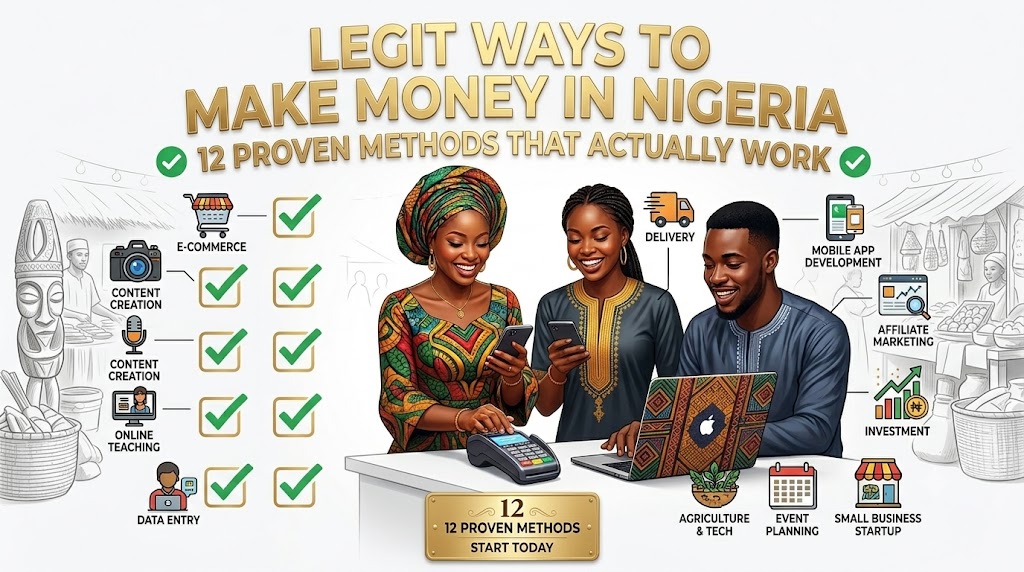
Let’s be honest with each other for a second. The price of garri keeps climbing, fuel costs change every other week, and a single salary just doesn’t stretch the way it used to. If you’ve been searching for legit ways to make money in Nigeria, you’re not alone — millions of Nigerians are doing the same thing right now, often from their phones, during traffic, or after work.
The good news? Nigeria’s digital economy is booming. From freelancing to mini importation, there are real, sustainable income streams available to anyone willing to put in consistent effort. The bad news? The internet is also flooded with scams promising “double your money in 24 hours” — and many Nigerians have lost hard-earned savings chasing these traps.
This guide cuts through the noise. We’ll walk through genuinely legit ways to make money in Nigeria, both online and offline, with realistic expectations, tools you’ll need, and honest pros and cons — no hype, no empty promises.
What Makes a Money-Making Opportunity Legit in Nigeria?
Before diving into the list, it helps to know how to separate real opportunities from scams disguised as “investment platforms.”
A legit income source in Nigeria usually has these features:
- You provide a real product, service, or skill in exchange for payment
- Earnings are tied to effort or output, not “referrals” or “doubling” promises
- No upfront payment required to “activate” your earnings (a major red flag)
- Verifiable platforms with real reviews, payment proof, and a track record
- Transparent payment terms — you know exactly how and when you’ll be paid
If a platform promises guaranteed daily returns with zero work, claims you’ll get rich in days, or asks you to recruit others before you can withdraw your own money, walk away. These are classic signs of Ponzi schemes — and Nigeria has seen too many of these collapse, wiping out savings overnight.

Top 12 Legit Ways to Make Money in Nigeria
-
Freelancing (Online Jobs for Nigerians)
What it is: Offering skills like writing, graphic design, video editing, virtual assistance, or programming to clients worldwide.
How to start: Create a portfolio showcasing 2-3 sample projects, then build a profile on freelance platforms.
Tools/platforms needed:
- Upwork, Fiverr, or Freelancer.com
- A laptop and stable internet
- Payment platforms like Payoneer or Wise
Realistic earnings: ₦500,000–₦2,000,00 + monthly, depending on skill level and client base. Beginners often start around ₦30,000–₦80,000 monthly while building reputation.
Pros: Work from anywhere, paid in dollars, scalable skills
Cons: Slow start, competitive, requires patience to build a client base
-
Affiliate Marketing
What it is: Promoting other people’s products and earning a commission on every sale made through your unique link.
How to start: Join affiliate programs, build an audience (blog, Instagram, TikTok, or WhatsApp groups), and share honest product recommendations.
Tools/platforms needed:
- Jumia Affiliate Program, Amazon Associates, or Selar’s affiliate marketplace
- Social media accounts or a website
- Basic content creation tools (Canva, CapCut)
Realistic earnings: ₦200,000–₦1,000,000 monthly, depending on audience size and niche. Top performers with large followings can earn significantly more.
Pros: Low startup cost, passive potential once content is published
Cons: Requires an audience first, commissions can be inconsistent
-
Blogging
What it is: Creating a website around a topic you understand well (finance, tech, relationships, food) and monetizing through ads, affiliate links, or sponsored posts.
How to start: Pick a niche, register a domain, set up WordPress hosting, and publish SEO-optimized content consistently.
Tools/platforms needed:
- WordPress + hosting (Bluehost, Hostinger)
- Google AdSense or direct ad sales
- SEO tools like Ubersuggest, SEMRUSH Google Trends, or Google Search Console
Realistic earnings: ₦0–₦50,000 in the first 6 months (building phase); ₦300,000–₦2,000,000+ monthly once traffic grows (12-24 months in).
Pros: Long-term passive income ideas in Nigeria potential, builds authority
Cons: Slow growth, requires consistent writing and SEO patience
-
YouTube Automation
What it is: Running a YouTube channel without appearing on camera — using voiceovers, stock footage, or animations created by you or outsourced editors.
How to start: Pick a faceless-friendly niche (top 10 lists, documentaries, motivational content), script videos, and use editors from Fiverr if you can’t edit yourself.
Tools/platforms needed:
- CapCut, DaVinci Resolve, or Canva
- AI voiceover tools (ElevenLabs, Murf)
- YouTube Partner Program (requires 1,000 subscribers + 4,000 watch hours)
Realistic earnings: ₦0 for the first 3-6 months; once monetized, ₦200,000–₦3,000,000+ monthly depending on niche and views.
Pros: Scalable, doesn’t require showing your face
Cons: Long wait before monetization, requires consistency and reinvestment
-
Social Media Management
What it is: Managing Instagram, Facebook, or TikTok pages for businesses — creating content, scheduling posts, and engaging followers.
How to start: Offer free or discounted services to 1-2 local businesses to build a portfolio, then approach paying clients.
Tools/platforms needed:
- Canva for graphics
- Meta Business Suite for scheduling
- A smartphone with a decent camera
Realistic earnings: ₦30,000–₦200,000 per client monthly. Managing 3-4 clients can bring ₦100,000–₦700,000 monthly.
Pros: High demand from small businesses, low entry barrier
Cons: Requires good communication skills and consistency
-
POS (Point of Sale) Business
What it is: Offering cash withdrawal, deposit, and transfer services to people in your community using a POS terminal.
How to start: Register with a POS provider, get your terminal, fund your float (working capital), and set up in a high-traffic area.
Tools/platforms needed:
- POS terminal from Moniepoint, OPay, or PalmPay
- Initial float of ₦50,000–₦200,000
- A shop space, kiosk or even umbrella stand.
Realistic earnings: ₦3,000–₦15,000 daily (₦90,000–₦450,000 monthly), depending on location and transaction volume.
Pros: Steady daily income, low technical skill needed
Cons: Requires capital, cash-handling risks, location-dependent
-
Mini Importation
What it is: Buying cheap products in bulk from China (via platforms like Alibaba or 1688) and reselling them in Nigeria at a profit.
How to start: Research trending products, find a reliable supplier and shipping agent, place a small test order, and sell via WhatsApp, Instagram, or Jiji.
Tools/platforms needed:
- Alibaba, 1688, or DHgate
- A shipping agent (many operate from Lagos)
- Social media for sales
Realistic earnings: ₦50,000–₦300,000 profit monthly on a starting capital of ₦30,000–₦100,000, depending on product turnover.
Pros: High profit margins, flexible scale
Cons: Shipping delays, requires marketing skills, upfront capital needed
-
Online Tutoring
What it is: Teaching students academic subjects, languages, or test prep (JAMB, WAEC, IELTS) via video calls or recorded lessons.
How to start: Identify your strongest subject, create a simple profile, and join tutoring platforms or offer lessons via Zoom to local students.
Tools/platforms needed:
- Zoom or Google Meet
- Preply, Tutor.com, or local WhatsApp groups
- A smartphone or laptop with stable internet
Realistic earnings: ₦1,500–₦5,000 per hour locally; international platforms can pay ₦5,000–₦15,000 per hour.
Pros: Flexible hours, rewarding work
Cons: Requires subject expertise, income tied to hours worked
-
Data Entry Jobs
What it is: Entering, organizing, or transcribing data for businesses remotely — one of the most accessible online jobs for Nigerians with basic computer skills.
How to start: Build a simple profile highlighting typing speed and attention to detail, then apply on remote job boards.
Tools/platforms needed:
- A computer with Microsoft Excel/Google Sheets
- Clickworker, Remotasks, or Fiverr
- Reliable internet
Realistic earnings: ₦50,000–₦120,000 monthly for part-time work; more for full-time remote roles.
Pros: Low skill barrier, flexible schedule
Cons: Often low-paying per task, repetitive work
-
Selling Digital Products
What it is: Creating and selling e-books, templates, courses, or printables that customers download instantly — one of the best passive income ideas in Nigeria.
How to start: Identify a problem you can solve (e.g., “CV templates for job seekers” or “Igbo language learning guide”), create the product, and list it for sale.
Tools/platforms needed:
- Selar, Gumroad, or Paystack for payments
- Canva or Google Docs for creation
- Social media for promotion
Realistic earnings: ₦40,000–₦200,000+ monthly, depending on product quality and marketing effort. Some creators earn over ₦1 million during launches.
Pros: True passive income once created, no shipping or inventory
Cons: Requires upfront effort and marketing to gain traction
-
Ride-Hailing or Delivery Services
What it is: Driving for platforms like Bolt or Uber, or delivering food and packages via Gokada, Chowdeck, or Glovo.
How to start: Register with the platform, complete verification (driver’s license, vehicle/bike inspection), and start accepting rides or deliveries.
Tools/platforms needed:
- A registered vehicle, bike, or even a bicycle (for delivery)
- Smartphone with the platform’s app
- Valid documentation
Realistic earnings: ₦5,000–₦15,000 daily for drivers (₦150,000–₦450,000 monthly); delivery riders earn slightly less but with lower entry costs.
Pros: Immediate daily income, flexible hours
Cons: Fuel costs, vehicle maintenance, traffic stress
-
Agribusiness
What it is: Small-scale farming or livestock rearing — poultry, catfish, vegetables, or snail farming — for local sale.
How to start: Start small (e.g., 50 broiler chickens or a small vegetable plot), learn from local farmers or YouTube tutorials, and sell to neighbors, markets, or restaurants.
Tools/platforms needed:
- A small plot of land or backyard space
- Basic farming inputs (feed, seeds, fencing)
- Local cooperative or farming groups for guidance
Realistic earnings: ₦50,000–₦300,000 profit per poultry cycle (8-10 weeks), depending on scale.
Pros: Steady demand for food products, government support programs available Cons: Requires land, vulnerable to disease/weather, longer cycles before profit
Common Mistakes Nigerians Make When Trying to Make Money Online
- Chasing “get rich quick” schemes — If it promises guaranteed daily returns, it’s likely a Ponzi scheme.
- Jumping between hustles too fast — Switching methods every two weeks prevents you from building momentum or expertise.
- Ignoring skill-building — Many people want income without investing time in learning a marketable skill first.
- Not separating business and personal finances — This makes it hard to track real profit, especially in POS and importation businesses.
- Expecting instant results from content-based income — Blogging, YouTube, and affiliate marketing typically take 3-6 months to show meaningful returns.
- Falling for fake “training” that requires payment — Genuine skills can be learned for free via YouTube, freeCodeCamp, or local community workshops.
How to Start Today With Little or No Capital: A 7-Day Action Plan
Day 1: Pick ONE method from this list based on your current skills and interests. Don’t try to do everything at once.
Day 2: Research the platform you’ll use (e.g., create your Fiverr profile, or research suppliers if going into mini importation).
Day 3: Build your first asset — a portfolio sample, a social media page, or your first product idea.
Day 4: Learn one new relevant skill via a free YouTube tutorial (e.g., Canva design, copywriting basics).
Day 5: Make your first move — apply to 3 freelance jobs, publish your first post, or contact your first potential client.
Day 6: Reach out to your network — tell friends and family what you’re offering. Word of mouth still works.
Day 7: Review what worked, adjust your approach, and plan your next week’s targets.
Conclusion
There’s no shortage of legit ways to make money in Nigeria — but there is a shortage of patience and consistency. Whether you choose freelancing, mini importation, or starting a small agribusiness venture, the real secret is picking one method, learning it properly, and sticking with it for at least 3-6 months before judging results.
Don’t try to do all 12 at once. Pick the one that fits your current skills, time, and capital — and commit to it.
Frequently Asked Questions
What is the fastest legit way to make money in Nigeria?
Ride-hailing, delivery services, and POS businesses offer the fastest daily income since earnings start immediately after setup. Freelancing can also pay quickly if you already have marketable skills.
Can I make money online in Nigeria without investment?
Yes. Freelancing, affiliate marketing, social media management, and data entry require little to no capital — just your skills, a smartphone, and internet access.
Which online job pays Nigerians the most?
Freelancing in high-demand skills like software development, copywriting, and graphic design tends to pay the most, especially when working with international clients via Upwork or Fiverr.
How can students make money in Nigeria?
Students can earn through online tutoring (teaching subjects they’re strong in), affiliate marketing on campus social media groups, selling digital study guides, or freelancing during free periods between classes.
Found this guide helpful? Bookmark this page so you can revisit it as you start your journey, and share it with a friend who’s also searching for genuine income opportunities. Pick one method, take action this week, and stay consistent — that’s how real financial progress happens.